

No subtitles for this video yet.
What would "traditional" fashion look like without colonialism?
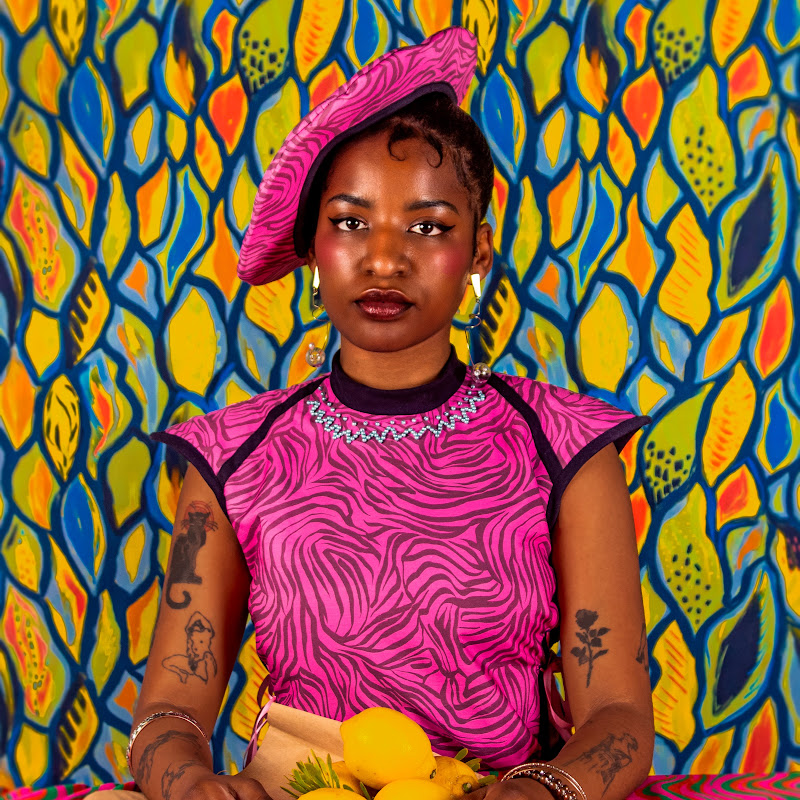
DescriptionOr how Bridgerton taught me to stop worrying and love the bomb :) In which, inspired by the alternative reality of the Bridgerton universe, I attempt to reimagine what the dress of my ancestors would be in this world, as the forces of German and British missionary-settler-colonialism no longer exist. And then spiral iMore
Or how Bridgerton taught me to stop worrying and love the bomb :)
In which, inspired by the alternative reality of the Bridgerton universe, I attempt to reimagine what the dress of my ancestors would be in this world, as the forces of German and British missionary-settler-colonialism no longer exist. And then spiral into an existential crisis.
Sources consulted/cited:
[1] Hartman, S. (2008) Venus in Two Acts. Small Axe, 12(2), pp. 1–14. https://warwick.ac.uk/fac/arts/history/research/centres/blackstudies/venus_in_two_acts.pdf?utm_source=chatgpt.com
[2] Harries, P. and Davidson, P. (1980) Cotton Weaving in South-East Africa: Its History and Technology. https://www.academia.edu/24078884/Cotton_weaving_in_South_east_Africa_its_history_and_technology
[3] James, D. (1996) ‘“I dress in this fashion”: transformations in Sotho dress and women’s lives in a Sekhukhuneland village, South Africa’, in Hendrickson, H. (ed.) Clothing and Difference: Embodied Identities in Colonial and Post-Colonial Africa. Durham: Duke University Press, pp. 157–180.
[4] Kirkaldy, A (2010) ‘Klaas Koen: Identity and belonging in the Berlin Mission Society during the late nineteenth century’, Historia, 55(2), pp. 99–120.
[5] Leeb du Toit, J. (2017) isiShweshwe: A History of the Indigenisation of Blueprint in Southern Africa https://bridgebooks.co.za/products/9781869143145?srsltid=AfmBOoqDDx5KVvq_UCVRE3Tu6MUGpXhsgck1WevUG72ZGu9ouHrNHoqO
[6] Rakgogo, T.J. and Zungu, E.B. (2022) ‘The elevation of Sepedi
- Loading…